Why is Secure Photo Sharing Important?
These days, how you deliver photos to clients says as much about your professionalism as the quality of your work. A secure photo sharing system does double duty: it safeguards your income by preventing unauthorized downloads, maintains quality while demonstrating to potential clients that you take their privacy seriously.
This article looks at how you can both protect your work from unauthorised use, and methods of sharing or sending photos to clients in a private and secure way.
5-Step Secure Photo Sharing Checklist
Strip Metadata but Keep Copyright Info
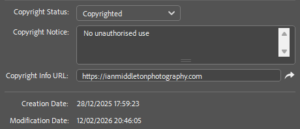
Remove EXIF and GPS data so viewers can’t see your exact location or camera serial number. On the flipside though, make sure you have set and don't remove your embedded copyright information. If you are using Adobe Photoshop or Lightroom, you can set this under the file info section.
Enable End-to-End Encryption (E2EE)
Use services where only the sender and recipient have the "key" to view the files.
Set Expiry Dates
Use links that automatically "self-destruct" or expire after 24–48 hours.
Password Protection
Never send a "naked" link; always require a unique password sent via a separate channel (like Signal or SMS).
Disable Downloads
If you are only seeking feedback or just allowing the client to view and choose which photos they want to purchase, use a "view-only" gallery to prevent unauthorized saving.
If you have a WordPress website, use a plugin that prevents right click saving and screen grabs.
Protecting Your Work from Unauthorized Use
Every photographer faces this challenge eventually. Whether you shoot weddings, corporate events, product photography, or commercial work, someone will attempt to steal your images; even claiming they didn’t know they were doing wrong. I’ve had many people steal my images and in some cases I have even managed to get them to pay me compensation.
While there is no completely foolproof solution, there are several things you can do to deter the vast majority of would-be thieves. Here’s a few:
Watermarking
Watermarking remains the most common protection method. There is much debate as to whether this actually deters people, but a watermark can certainly send a clear message to people that the photo is yours, and should they share it on their blog or social media there is no denying where it came from and who it belongs to. A watermark will certainly deter the lighthearted thief who might otherwise say, “I did not know it was copyrighted” or “I couldn’t find the copyright owner” If you are building a gallery to show a photoshoot to a client to choose which prints they want to purchase, then a watermark can help ensure they don’t download and make their own prints.
A watermark is a good way to brand your work, and ideal for blogs or general photography portfolios. However, if your goal is to sell wall art prints, potential buyers could mistakenly believe that the watermark will be on the final print, and you could lose sales as a result. So it’s important to make clear on your website that the watermark will not be on the final print. Additionally, a large watermark can make it hard for a potential buyer to see the image clearly, so they could be put off buying for this reason.
The key is strategic placement, they should not overwhelm the image itself.
I only watermark my images when uploaded to social media, or occasionally on my blog. But where the goal is to sell my photos, then I don’t.
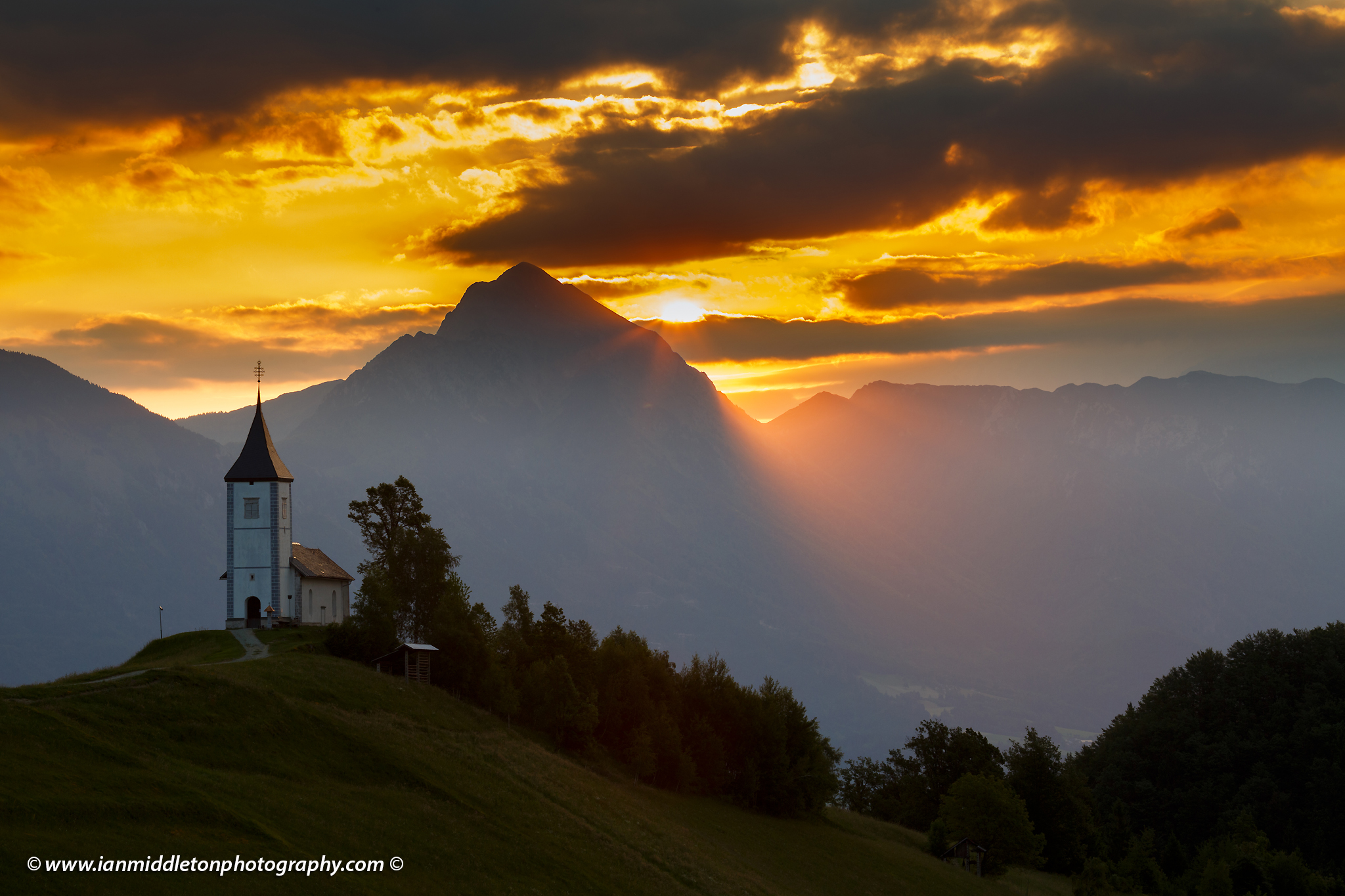
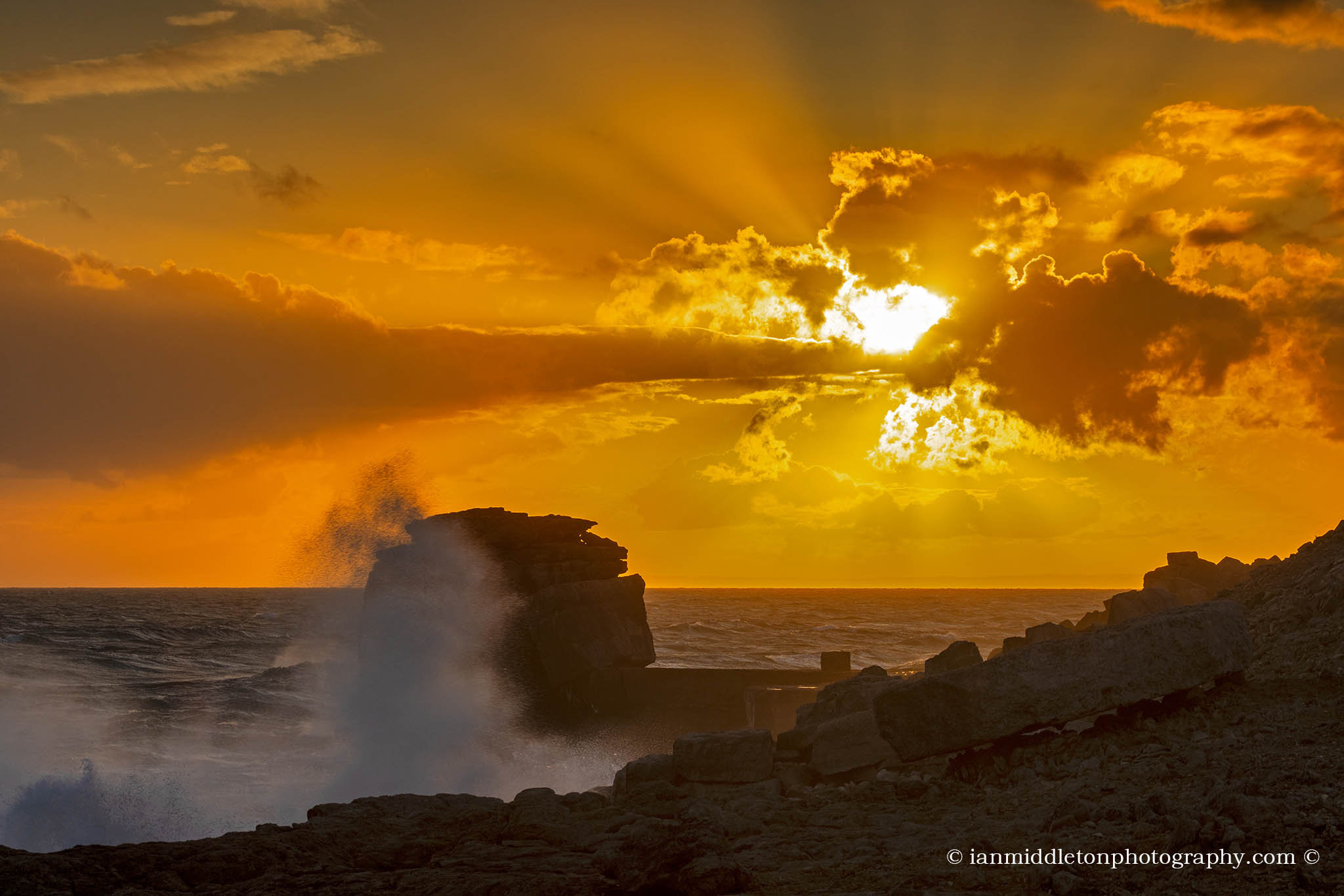
When I do, I place a simple text watermark in one of the corners with a copyright symbol © and my website so it promotes my website, and can be traced back to me for anyone interested in buying a print or licensing for stock usage.
Look for photo sharing platforms that automatically apply watermarks when others view your galleries, such as Smugmug or Envira WordPress Plugin.
Download prevention
Download prevention works on multiple levels. Disabling right-click functionality is a good first choice, and quite easy to implement. It can certainly stop casual downloaders or make people think twice. However, more determined and sophisticated users may attempt to extract images from page source code.
If you can, test your chosen platform by examining the page source yourself. Search for image filenames and attempt to access them directly. Try downloading and upscaling to ensure clients can’t bypass your security measures.
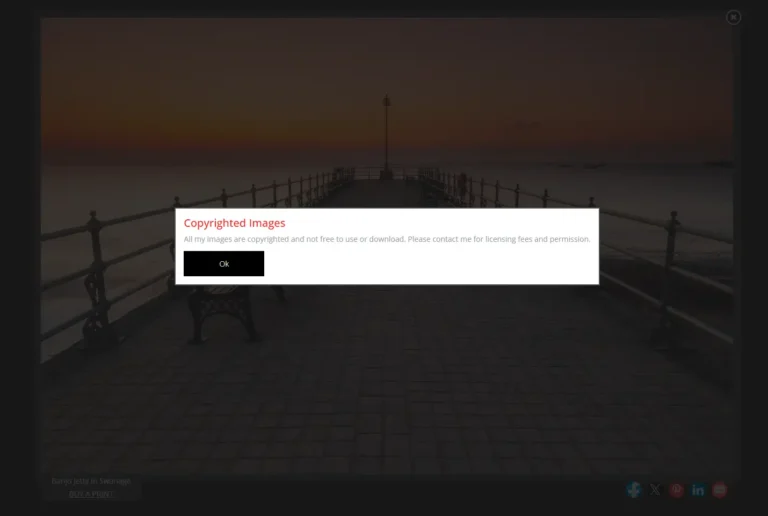
The Envira Gallery plugin for WordPress has an add on that will allow you to disable right click across all your Envira Galleries, and include a customised message such as this.
Access control
Access control through password-protected galleries and encrypted sharing links adds another crucial layer. These features let you grant selective access, ensuring only paying clients can view and download their final images. This is ideal for wedding, family and event photographers. You can easily create custom galleries for a particular shoot to share with the client. The links can be unlisted (meaning no links anywhere on the website (plus you should no index the page so it won’t appear on the search engines) then give the link and, if set, password to the client.
Smugmug does this by allowing you to create an unlisted gallery, which is hidden from search engines and can only be accessed with a direct link. The gallery can then be made available to anyone with a link, password protected or people you choose. The people you choose option allows you to send specific invites. Each invite has a unique redemption token. Once your guest uses the invite, no one else can—even if your guest forwards the invitation email on to someone else. The “anyone with a link” option means clients can also share it with others if they want. This is ideal for family or wedding shoots, so they can share with family or close friends.
Envira also allows you to create a password protect gallery with one of its add-ons, and you can manually make the gallery url unlisted.
File size limitations
File size limitations can also deter theft by making extracted images unsuitable for printing or commercial use. You can do this only uploading small images to begin with, or use a platform which allows you limit the maximum size an image can be viewed.
Secure Photo Sharing Builds Trust
Security features aren’t just about protecting revenue, they’re great marketing tools that ensure your services are seen as trustworthy.
For boudoir photographers, privacy is paramount. When you can detail exactly how you protect intimate images, you give potential clients confidence to book with you rather than others. This reassures clients and shows them you are a professional who they can trust with their private images.
Family photographers face similar concerns. Parents increasingly worry about their children’s images circulating online, being misused for bullying, or becoming unwanted memes. When you explain your commitment to keeping family photos secure and under parental control, you address fears that many parents have but few photographers acknowledge proactively.
Safeguarding your Work While Making it Accessible
The best security system fails if you can’t access your own work when you need it. Balance protection with practical usability. Smugmug allows you to upload full size jpegs, so also acts as unlimited online storage for your photos.
Mobile access through dedicated apps provides essential backup. If your laptop fails during a client meeting or on location, being able to pull up your portfolio or recent work from your phone can save the situation.
Account recovery deserves attention before you need it. Understand your platform’s recovery process, especially when traveling internationally or working from unfamiliar locations. Travel and landscape photographers particularly need confidence they can access their work from anywhere. Workshop instructors leading sessions abroad face the same challenge.
Loading speed affects client satisfaction significantly. A secure gallery that takes too long to load frustrates clients and reflects poorly on your professionalism. Test potential platforms under various conditions, including slower mobile data connections. You can’t always count on Wi-Fi being available when clients want to review their images.
Making Security Work for Your Business
The right photo sharing solution protects both your revenue and your clients’ privacy. When evaluating options, prioritize platforms offering comprehensive security features and make your clients aware of the protection measures you’ve implemented.
Preventing image theft while building client confidence will help build trust and reliability in for your photography business.
Choose a website builder that grows with your needs, protecting the work you’ve created and the trust you’ve earned.
Frequently Asked Questions about Secure Photo Sharing
What is the most secure way to send photos to a client?
The most secure method is using a dedicated professional gallery service or an encrypted cloud provider (like Proton Drive or Tresorit) that offers password protection, expiry dates, and end-to-end encryption. Avoid standard email attachments for high-res or sensitive work. To send high res photos, especially in bulk here are two good options.
WeTransfer is a popular way to send encrypted files. It uses Transport Layer Security (TLS) for files in transit and Advanced Encryption Standard (AES) 256-bit encryption for files stored on their servers.
SwissTransfer is a great alternative, and you can send up to 50GB free. It protects files with SSL/TLS encryption during transmission and stores data in Infomaniak's Swiss data centers. Files are secured with AES-GCM encryption in transit, and users have the option to add password protection. While the service is free and generally considered safe for sharing files up to 50 GB, it doesn't offer end-to-end encryption, meaning the service provider could potentially access uploaded content.
Smugmug: While not a file sharing service, Smugmug allows you to create password protected galleries which your clients can access with a link (and the password sent separately). This is ideal for wedding or event photographers. You can also allow the clients the option to download the photos at whatever resolution you choose, or purchase digital downloads and prints directly from the gallery.
How do I stop people from downloading my shared photos?
While no method is 100% foolproof against screen captures, you can deter most users by using "View-Only" permissions in your sharing settings, applying prominent watermarks, and using platforms that disable the "Right-Click > Save As" function.
For WordPress websites, I use the WP Content Protection Pro plugin, which disables right click, lets you add a watermark to all images if you want, or only to hotlinked images. It also imprints a message and in most cases prevents screen grabs.
Does Google Photos or iCloud keep my photos private?
While both offer encryption "in transit" and "at rest," they are not typically end-to-end encrypted by default in the same way specialized privacy tools are. For maximum security, use a service where the provider itself cannot "see" your images.
Should I remove metadata before sharing photos?
Yes. Metadata (EXIF data) often contains the exact GPS coordinates of where a photo was taken and details about your equipment. Stripping this data is a crucial step for personal privacy and physical security.
As mentioned above though, make sure you embed your copyright info into the metadata.
More articles you might like: